---
title: Dragon
description: Differences between Eastern and Western dragons.
author:
name: Graciela Paula Caldeiro
url: http://graciela-caldeiro.idoneos.com
canonical: https://mitosyleyendas.idoneos.com/en/bestiario_mitologico/dragon/
source: en/bestiario_mitologico/dragon/index.md
---
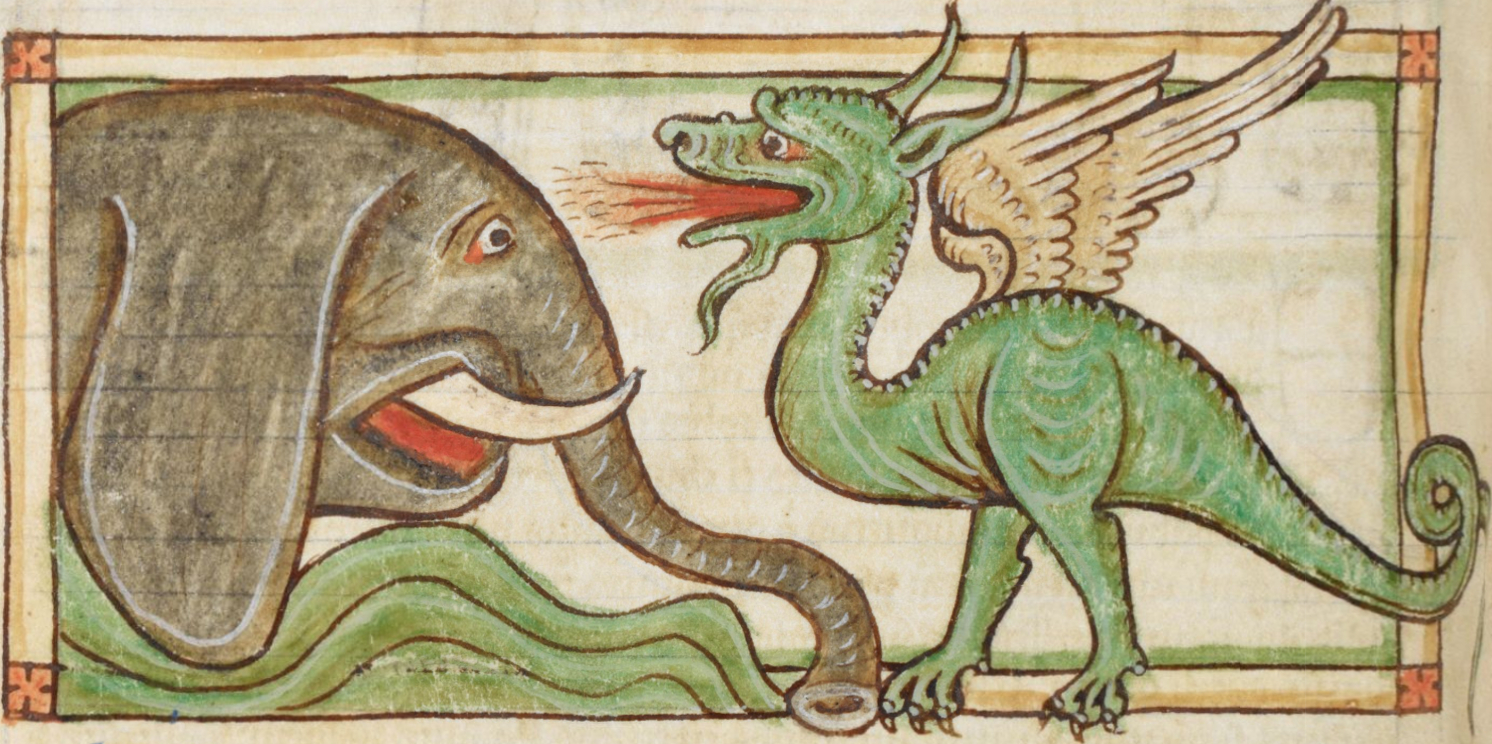
Dragon. Anonymous, Harley manuscript 3244, British Library. Source: Wikimedia Commons. Public domain.
Dragon
The dragon is a fantastical creature that can be found in most ancient traditions; however, its symbolism tends to differ. Thus, while the dragons of Western Europe are regarded as highly dangerous animals representing the forces of evil, in the East—China in particular—the dragon is a benevolent being of divine lineage.
The most common depictions attribute to it a large, voluminous body. Scales give it the appearance of a reptile, though its claws, closer to those of a feline, contrast with its bat-like wings. The ability to breathe fire from its mouth and enormous teeth complete the aspect of this fabulous creature, halfway between a serpent and a lion.