Lilith
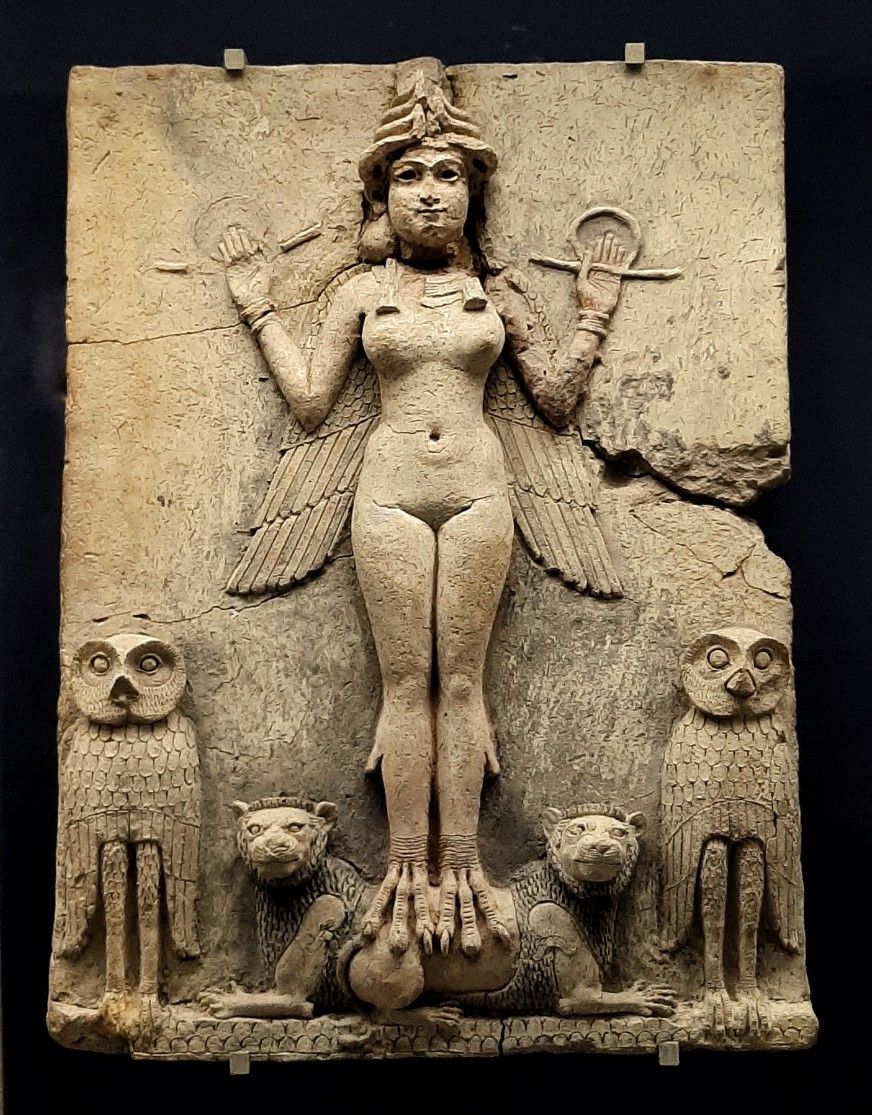
Source: Wikimedia Commons. CC BY-SA 4.0.
Lilith corresponds to the Babylonian Lilitu, or the demon of storms. In the biblical account (Isaiah 34:14) Lilith dwelt in the desert or in abandoned ruins. She also inhabited the tent that the wicked man left behind to die: "In his tent dwells that which is none of his; brimstone is scattered upon his habitation" (Job 18:15).
Lilith also appears in the Greek and Roman tradition under the name Lamia, and in the Germanic tradition she may be Brünnhilde in the Nibelung saga. She might likewise be compared to the Greek image of Hecate.
For Alfred de Vigny, Lilith is the spirit of the night, Adam's lover, the rival of Eve and her children. For Victor Hugo, she is Satan's eldest daughter, the dark soul of the world. But Lilith might also be, together with Isis, the sole possessor of a great secret knowledge: the secret name of God.
Iconography
The earliest image of Lilith dates from 1959 BC. It is the Burney Relief, housed in the British Museum. The woman depicted is beautiful, winged, and naked, with bird's feet, standing upon two lions and flanked by a pair of owls, holding an “ephap” for measuring grain in her hand. She wears a turban and raises her arms to shoulder height. According to legend, Lilith nested at the centre of the Huluppu tree, a willow that had a dragon at its base and a red bird at its crown.